Common mistakes made in APA style

What’s the most difficult part of the APA style for students? Continuing the practice from 2010, I’ll demonstrate the typical mistakes found in the manuscripts submitted for the 4th issue of the Journal of European Psychology Students (JEPS). Given that JEPS requires submitted manuscripts to follow APA style, this post may be useful for anyone writing papers according to these regulations.

This post will also refer to any material that would provide more information on how to avoid the incompatibility with the APA style.

Continue reading

Facebooktwitterrss

Who publishes the most reputable journals in psychology?

In the publish or perish world of modern psychology, the question of who publishes the journals we send our manuscripts to is not asked as often as it should be. We usually aren’t even aware who the publishers are. This is the case even when we only read, cite and use articles from scientific journals. As a rule of thumb, we are more than aware of the prestige of particular journals and their public face – topic, review policy, editorial team and even access policy; but who publishes them? Who owns them and what are their policies?

Find out in this installment of the Journal of European Psychology Students Bulletin.

Continue reading

Ivan Flis

Ivan Flis is a PhD student in History and Philosophy of Science at the Descartes Centre, Utrecht University; and has a degree in psychology from the University of Zagreb, Croatia. His research focuses on quantitative methodology in psychology, its history and application, and its relation to theory construction in psychological research. He had been an editor of JEPS for three years in the previous mandates.

More Posts

Facebooktwitterrss

Lessons from a published fake study

There are so many obstacles you have to face when doing your own research: After finding a suitable field, conducting your research and writing it down on paper, your supervisor might end up tearing it into pieces should they find shortcomings in your methodology or results section. In contrast to the widespread procedure, the authors of the study presented below have failed not only to discuss methodological issues, but they have made up a complete study that got published in the Indian Journal of Psychiatry. Has the entire review process failed for this study? What does this case teach you?

Continue reading

Sina Scherer

Sina Scherer

Sina Scherer, studying at University of Münster, Germany, and University of Padova, Italy. I have previously worked as JEPS Bulletin Editor and am active in a NMUN project simulating the political work of the United Nations as voluntary work. I am interested in cognitive neuroscience and intercultural psychology, anthropology and organizational psychology (aspects of work-life balance, expatriation).

More Posts

Facebooktwitterrss

Open Access Week 2011

Open Access Week is spreading around the globe! Attend lectures, seminars, weminars, discussions, conferences, workshops, webcast or meetings at the university or institution closest to you. What am I talking about? This month, from October 24th to October 30th, people interested in Open Access are gathering to talk about, get informed or just share their experience with open access.

Everybody from activists and students to professors and researchers and all those in between are organizing a bunch of events all around the globe – and a fair share of those are in Europe. If you’re interested in OA, this might be the perfect opportunity to deepen that interest, learn something new and meet new interesting people (who are into OA of course).


Continue reading

Ivan Flis

Ivan Flis is a PhD student in History and Philosophy of Science at the Descartes Centre, Utrecht University; and has a degree in psychology from the University of Zagreb, Croatia. His research focuses on quantitative methodology in psychology, its history and application, and its relation to theory construction in psychological research. He had been an editor of JEPS for three years in the previous mandates.

More Posts

Facebooktwitterrss

How to spice up your presentations

There is nothing as dull in a student’s life as badly made PowerPoint presentations. Using PowerPoint has become a rule, whenever you present something in an university setting or otherwise. Everybody does it. And even when you follow all the hints on ‘how to make a good presentations’, like the ones Maris talked about in our last post at the JEPS Bulletin, you end up with just a PowerPoint presentation. How to change that and spice things up?

Ivan Flis

Ivan Flis is a PhD student in History and Philosophy of Science at the Descartes Centre, Utrecht University; and has a degree in psychology from the University of Zagreb, Croatia. His research focuses on quantitative methodology in psychology, its history and application, and its relation to theory construction in psychological research. He had been an editor of JEPS for three years in the previous mandates.

More Posts

Facebooktwitterrss

What makes a presentation good?

Presenting your research results might be the highlight in your undergraduate degree. This is your chance to tell the audience why your findings are relevant. What would make a good presentation? Naturally, the one that convinces them – your work has its place in the pool of knowledge. What’s the formula to make people listen (and follow your story)?

Continue reading

Facebooktwitterrss

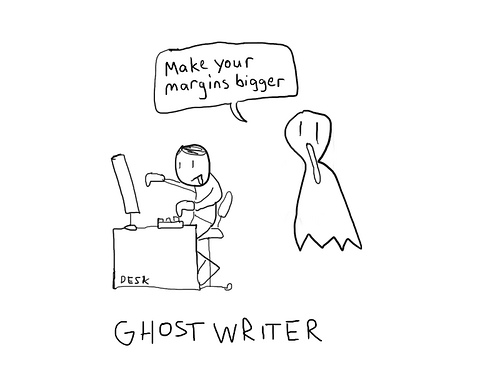
Written by the hands of a ghost

The honour of being a renowned researcher is linked to a mass of publications. Publish or perish they say. Yet publishing is a very time-consuming work and perhaps the topic of ghost-writing should be discussed in this context.

A ghostwriter is a professional writer who is paid to write books, articles, reports, or texts that are officially credited to another person. Mozart for instance is a well-known example of a musical ghostwriter for his patrons. In Academia, ghost-writing threatens the academic world and its honour.

What are types of academic ghost-writing? How do universities try to prevent it? How do agencies exploit the pressure on academics to publish by offering ghost-writing services in a twilighted zone of legacy? Let’s examine.

Continue reading

Sina Scherer

Sina Scherer

Sina Scherer, studying at University of Münster, Germany, and University of Padova, Italy. I have previously worked as JEPS Bulletin Editor and am active in a NMUN project simulating the political work of the United Nations as voluntary work. I am interested in cognitive neuroscience and intercultural psychology, anthropology and organizational psychology (aspects of work-life balance, expatriation).

More Posts

Facebooktwitterrss

Tomatoes against procrastination

When it comes to writing your paper, procrastination is your friend, right? … I mean your foe… Sometimes it’s so horribly hard to get concentrated on what you should really be doing. Instead you find yourself checking Facebook yet another time (I bet this is how you ended up reading this!). Your work doesn’t seem any more appealing even this after you have washed your dishes, replied e-mails from month ago, made an umpteenth cup of coffee, cleaned your room, swiped your windows shiny-clean and perhaps even your doors and walls? How about starting working on that assignment now? Well, actually, before you do, check out the Pomodoro Technique®.

Continue reading

Facebooktwitterrss

APA supporting Open Access?

Four years ago, the President of the American Psychological Association, addressed the ‘thorny debate of Open Access’ as she puts it. What is APA’s standing on open access?

Does APA, probably the most influential organization in psychology today, support the goal of open access to research? I am a bit confused as to an answer to that question, so I tried to write an informed perspective on APA’s policy on open access. You can find what my inquiry has elucidated in the rest of this post.

Continue reading

Ivan Flis

Ivan Flis is a PhD student in History and Philosophy of Science at the Descartes Centre, Utrecht University; and has a degree in psychology from the University of Zagreb, Croatia. His research focuses on quantitative methodology in psychology, its history and application, and its relation to theory construction in psychological research. He had been an editor of JEPS for three years in the previous mandates.

More Posts

Facebooktwitterrss

How to critically evaluate internet-based sources?

Imagine the following: you are doing a literature search on a topic, but have really hard time discovering enough background information in traditional sources such as books and journal articles. Then, you miraculously find a web page that contains all the information you need. Just go ahead and cite it? Think again! How do you know if it’s accurate and trustworthy?

Continue reading

Martin Vasilev

Martin Vasilev

Martin Vasilev is a final year undergraduate student of Psychology at the University of Sofia, Bulgaria, and the author of some of the most popular posts on JEPS Bulletin (see for example, his post on the most common mistakes in APA style was the most read in the JEPS Bulletin in 2013 and his post on writing literature reviews, which was reprinted in the MBA Edge, a magazine for prospective postgraduate students in Malaysia)

More Posts

Facebooktwitterrss